
Most people in peptide skincare have heard of copper peptides. GHK-Cu gets the spotlight. But there is another form of the same tripeptide that works through a completely different mechanism. And it does not need copper to do its job. Palmitoyl Tripeptide-1, also called Pal-GHK, attaches a fatty acid tail to the classic GHK sequence. This single modification changes everything. It turns a water-loving peptide into one that can cross the skin barrier. It transforms a copper-dependent wound-healing molecule into a copper-free collagen signal. And the clinical data is starting to catch up with what formulators have known for years.
What Is Palmitoyl Tripeptide-1?
Palmitoyl Tripeptide-1 is a synthetic peptide built on the GHK backbone. GHK stands for glycine-histidine-lysine. It is a naturally occurring tripeptide found in human blood plasma. At age twenty, your plasma carries roughly two hundred nanograms of GHK per milliliter. By age sixty, that drops to about eighty nanograms per milliliter. This decline tracks with the visible signs of aging. The connection sparked decades of research into whether replacing GHK could slow or reverse skin aging.
The parent molecule GHK was first isolated from human plasma by Dr. Loren Pickart in the nineteen seventies. Pickart noticed something unusual. GHK had a remarkably high affinity for copper ions. When GHK binds copper two plus, it forms GHK-Cu. This copper complex is what most people think of when they hear “copper peptide.” GHK-Cu accelerates wound healing. It stimulates collagen synthesis. It attracts immune cells to injury sites. It even modulates the expression of over four thousand human genes, essentially resetting damaged DNA expression patterns back toward a healthier state.
But GHK-Cu has limitations. It is highly water-soluble. This makes it difficult to deliver through the lipid-rich outer layer of skin. It is also chemically unstable in many formulations. Copper ions can react with other ingredients. They can generate free radicals if not properly chelated. These challenges led researchers to ask a different question. What if you could get the collagen-signaling benefits of GHK without the copper?
The answer came from adding a sixteen-carbon fatty acid chain to the GHK sequence. This palmitoyl group does two things at once. It makes the peptide lipid-soluble so it can penetrate the stratum corneum. And it changes the biological signal the peptide sends to skin cells. Palmitoyl Tripeptide-1 does not need copper to activate fibroblasts. It works as a matrikine instead.
How Palmitoyl Tripeptide-1 Signals Collagen Production
Here is where the science gets interesting. The term matrikine describes a very specific biological phenomenon. When collagen breaks down, it does not just disappear. The breakdown releases small protein fragments into the surrounding tissue. These fragments are matrikines. Skin cells have evolved to detect them as damage signals. When fibroblasts sense matrikines, they respond by ramping up new collagen production. It is the body’s built-in repair mechanism.
Palmitoyl Tripeptide-1 mimics these natural matrikine signals. Its GHK sequence resembles the kind of fragment that would be released when collagen degrades. Fibroblasts detect it through cell surface receptors. This triggers a signaling cascade inside the cell. The TGF-beta pathway activates. Smad proteins translocate to the nucleus. Gene transcription for type one collagen, type three collagen, and fibronectin increases. The fibroblast shifts from a resting state into a building state.
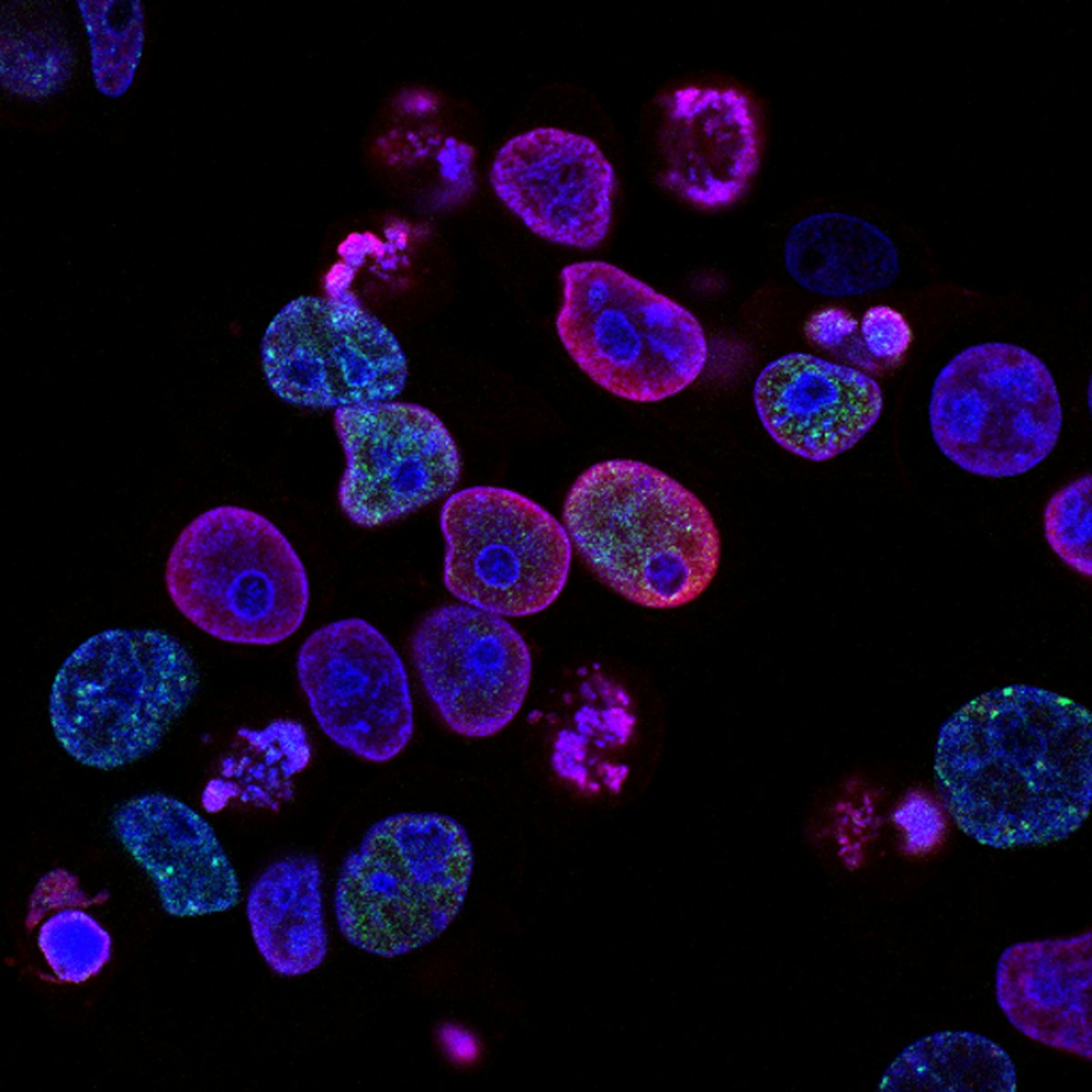
A twenty twenty-four study published in Skin Research and Technology showed exactly this effect in a human fibroblast model. Researchers tested a formulation containing palmitoyl tripeptide-1 alongside palmitoyl tetrapeptide-7. PCR analysis confirmed the active complex significantly stimulated fibroblast proliferation. Immunofluorescent imaging showed marked increases in both collagen and elastin protein levels. This was not a subtle nudge. The treated fibroblasts were visibly churning out extracellular matrix components.
But there is a newer dimension to this story. A twenty twenty-six paper in the Journal of Cosmetic Dermatology revealed something nobody expected. Collagen metabolism follows a circadian rhythm. Skin fibroblasts have an internal clock. Genes for collagen assembly peak during the day. Genes for collagen synthesis and secretion peak at night. Palmitoyl Tripeptide-1 showed its strongest effect when applied at nighttime. It boosted the natural nighttime peak of collagen production genes including Sec61a2, Mia3, and Pde4d. The researchers found that timed nighttime application of PT-1 combined with daytime application of baicalin, a plant flavonoid, produced synergistic results. This chronomodulated approach is a genuine innovation in peptide skincare.
The Palmitic Acid Problem Solved
Let me break down why the palmitoyl tail matters so much. Peptides are fundamentally water-loving molecules. Skin’s outer layer, the stratum corneum, is fundamentally lipid-loving. These two things do not mix well. A naked peptide like GHK sits on top of the skin. It cannot get through the lipid mortar between skin cells. This is the central challenge of all peptide skincare. You can have the most elegant molecular mechanism in the world. If the peptide never reaches living cells, it does nothing.
The palmitoyl tail solves this by making the peptide act like a lipid. Palmitic acid is a saturated fatty acid. It is one of the most common fatty acids in human skin. When you attach it to a peptide, the entire molecule becomes amphiphilic. It has a water-loving peptide head and a lipid-loving fatty acid tail. This lets it partition into the stratum corneum. It can slip between the lipid bilayers and reach the viable epidermis. From there it can diffuse deeper to the dermal-epidermal junction where fibroblasts live.
A twenty twenty-five review in the journal BioImpacts confirmed this directly. The authors evaluated GHK, GHK-Cu, and Pal-GHK for skin permeability. They found that chemical modification with a hydrophobic group, meaning the palmitoyl chain, significantly increased permeability of the peptide. This is not theoretical. It is a measured, documented difference in how much peptide actually reaches living skin.
So here is the full picture. Natural GHK declines with age. GHK-Cu puts the tripeptide back with copper and accelerates repair. But GHK-Cu struggles to penetrate skin on its own. Palmitoyl Tripeptide-1 solves the penetration problem. It delivers the GHK signal without copper. And it triggers collagen production through matrikine receptor activation. Each form of the GHK sequence serves a different purpose.
What the Clinical Data Actually Shows
Now here is the key data point. The twenty twenty-six circadian rhythm study I mentioned earlier included a thirty-participant clinical trial. Women applied a daytime product with baicalin and a nighttime product with palmitoyl tripeptide-1 for eight weeks. The results were measured with objective instruments, not just questionnaires. Skin luminance improved by sixteen point three percent. Nasolabial fold depth decreased by thirty-six point four percent. Skin firmness, measured as R2 parameter on a Cutometer, increased by twenty-four point four percent. These are substantial changes for a topical cosmetic ingredient over eight weeks.
But what most people miss is the formulation context. The PT-1 was not used alone. It was paired with baicalin on a timed schedule. This does not mean PT-1 needs baicalin to work. But it does mean the largest measured effects came from a combination protocol. A single-ingredient PT-1 cream might produce more modest results. The clinical data tells us PT-1 is effective. It does not yet tell us exactly how much of the effect is PT-1 alone versus the synergy with other actives.
A separate twenty twenty-four clinical study tested an eye cream containing palmitoyl tripeptide-1. This formulation also included yeast and rice fermentation filtrate, N-acetylneuraminic acid, and palmitoyl tetrapeptide-7. After twelve weeks, skin hydration increased by twenty-eight point one percent. Skin elasticity improved by eighteen point eight percent. Collagen density, measured by ultrasound, jumped fifty-five percent. These numbers are striking. A fifty-five percent increase in collagen density is not the kind of result you see with most cosmetic ingredients.
Again, this was a multi-ingredient formula. You cannot attribute all of that fifty-five percent to PT-1. But the in vitro arm of the same study showed the peptide complex directly stimulated fibroblast collagen production. The mechanism is there. The clinical translation is there. The formulation matters enormously. That is the honest read on the data.
Pal-GHK Versus GHK-Cu — Two Different Tools
It is tempting to think of Pal-GHK as just GHK-Cu minus the copper. That would be a mistake. These two molecules do different things in skin. GHK-Cu is a tissue remodeling agent with broad biological effects. It stimulates both collagen synthesis and collagen breakdown in a coordinated way. It attracts immune cells. It promotes angiogenesis, which means new blood vessel formation. It has antioxidant properties through the copper ion’s redox activity. It is a sledgehammer of tissue repair.
Palmitoyl Tripeptide-1 is more like a precision tool. It signals specifically for new matrix production through the matrikine pathway. It does not carry copper’s redox activity or its broad immunomodulatory effects. But it penetrates skin much better than GHK-Cu on its own. The palmitoyl tail makes it formulation-friendly in ways that GHK-Cu is not. You can put PT-1 into most emulsion systems without worrying about copper interacting with other ingredients. You cannot say the same for GHK-Cu.
Here is a practical way to think about it. GHK-Cu is best for intensive repair scenarios. Post-procedure skin. Compromised barriers. Areas that need accelerated healing with new blood vessel growth. PT-1 is better suited for daily maintenance. It works within a normal circadian rhythm. It signals collagen production without the metabolic overhead of managing copper chemistry in a bottle. Both have a place. They are complementary, not competitive.
Some formulations use both together. The Matrixyl 3000 combination from Sederma pairs Pal-GHK with Pal-GQPR, another palmitoylated matrikine peptide. This dual-signal approach targets collagen production through two different receptor pathways. It is a smart formulation strategy. The peptides reinforce each other without creating incompatibility problems.
Expert Insight — What Experienced Formulators Know
Let me share a few things the published papers do not emphasize enough. First, palmitoyl peptides are not trivial to formulate. The palmitoyl tail makes them hydrophobic. They can crash out of water-based serums if not properly solubilized. You need a solvent system that can hold the peptide in solution while still being compatible with skin. Glycols work. So do certain nonionic surfactants. But the wrong solvent at the wrong concentration creates problems. You will see the peptide precipitate as visible crystals in the bottle. The product still looks fine to most consumers. But the active ingredient is no longer in solution. It cannot penetrate skin as a solid crystal.
Second, concentration matters more than most brands admit. PT-1 shows biological activity in cell culture at concentrations in the parts-per-million range, typically two to ten parts per million. But skin is not a cell culture dish. You lose peptide to stratum corneum binding. You lose peptide to enzymatic degradation by skin proteases. A formulation with two parts per million PT-1 as a marketing claim is probably doing nothing. Effective concentrations in finished products are likely ten to fifty times higher than the minimum active concentration measured in cell culture. Without a published dose-response curve for human skin, formulators are essentially guessing. The ones who get results are using higher concentrations than the label-minimum approach.
Third, pH stability is a real concern. Peptides hydrolyze in water over time. The GHK sequence is relatively stable compared to longer peptides. But at a pH below four or above eight, hydrolysis accelerates significantly. Most skincare products sit between pH four point five and six point five. PT-1 is reasonably stable in this range. But every degree of temperature speeds up degradation. A product sitting in a hot warehouse or a bathroom with steam exposure may lose significant activity within months. The published shelf-life data for palmitoyl peptides in cosmetic formulations is surprisingly thin. This is an area where brands should do their own accelerated stability testing rather than trusting supplier claims.
Practical Context — Where PT-1 Fits in a Peptide Routine
If you are building a peptide skincare routine, PT-1 works best as a nighttime collagen signal. The circadian data gives us a clear rationale for this timing. Apply it after cleansing and before heavier creams. It pairs well with other signal peptides like Matrixyl, which is palmitoyl pentapeptide-4. It also pairs well with neurotransmitter-inhibiting peptides like Argireline or Syn-Ake. Those peptides work on muscle contraction. PT-1 works on collagen production. Different mechanisms. Different targets. No conflict.
What you should not do is mix PT-1 directly with strong acids in the same step. Alpha hydroxy acids at low pH can protonate the peptide and potentially alter its receptor binding. This is a precaution based on peptide chemistry rather than a documented incompatibility study. But the principle is sound. Keep your actives separated by formulation layer or by time of day. Use acids in the morning or on alternating nights. Give your peptides a clean environment to do their signaling work.
The peptide category in skincare is still young. We are in the early days of understanding how specific sequences interact with specific receptors. Palmitoyl Tripeptide-1 represents an elegant solution to a hard problem. How do you tell aging skin to make more collagen? You send it a signal that looks like the one it already listens for. You add a fatty acid tail so the signal actually arrives. And you time the delivery to match the skin’s own biology. That is smart skincare. Not hype. Not marketing. Just good biochemistry applied with precision.
Further Reading
- GHK-Cu Manufacturing and Demand: What Is Driving the Copper Peptide Boom in 2026
- Matrixyl Science: How Palmitoyl Pentapeptide-4 Signals Collagen Production
- Peptide Purity and Quality Testing: A Full-Spectrum Guide for 2026
Share this article
X ·
LinkedIn ·
Email
Last reviewed: August 2026. Peptide Proof Editorial Team.
Sources: Wang C et al., J Cosmet Dermatol, 2026 volume 25 issue 1 e70638. Mortazavi SM et al., BioImpacts, 2025 volume 15 article 30071. Yang F et al., Skin Res Technol, 2024 volume 30 issue 7 e13790. Pickart L et al., Biomed Res Int, 2015 volume 2015 article 648108. Leroux R et al., Int J Cosmet Sci, 2020 volume 42 issue 1 pages 53 to 59. Li H et al., Pharm Res, 2015 volume 32 issue 8 pages 2678 to 2689.