
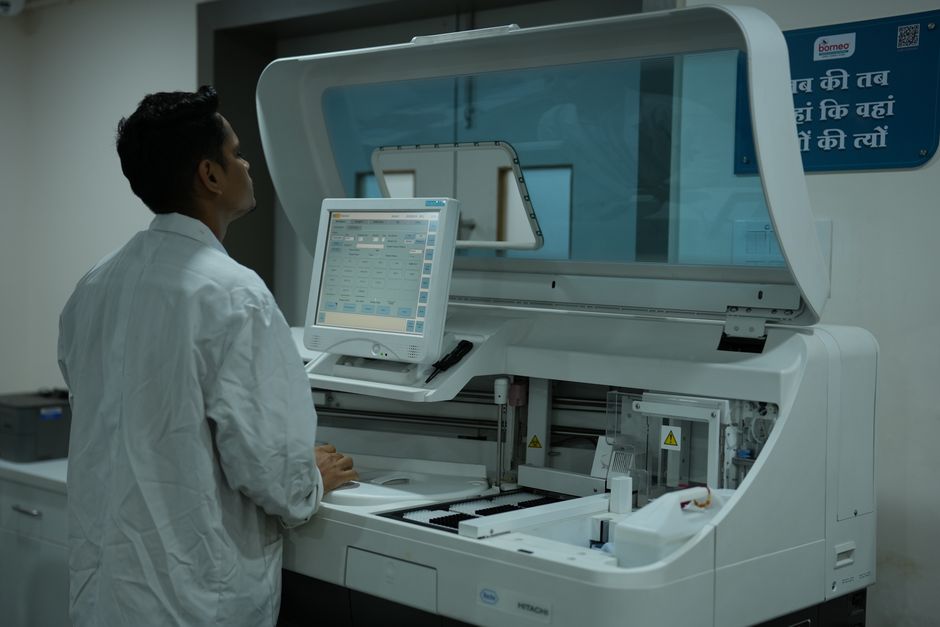
Information date: 14 September 2026 — A study in RSC Advances reports a controlled aqueous nanoassembly strategy that enables fully automated Fmoc solid-phase peptide synthesis with in-water coupling, replacing the toxic, environmentally regulated solvent dimethylformamide. The method ran on a commercially available synthesiser and produced peptides of varying length and sequence complexity, including sequences longer than thirty residues. Knowing that statement is not enough for an operating, research or compliance decision. The team must first establish who and what it applies to, how the effect reaches the real process, and which evidence would justify action.
Verified facts and scope
A study in RSC Advances reports a controlled aqueous nanoassembly strategy that enables fully automated Fmoc solid-phase peptide synthesis with in-water coupling, replacing the toxic, environmentally regulated solvent dimethylformamide. The method ran on a commercially available synthesiser and produced peptides of varying length and sequence complexity, including sequences longer than thirty residues.
The work is a synthetic methodology study covering reagent preparation, the coupling environment, automation on existing hardware and purity assessment of the resulting peptides. It reports no biological activity, no dosing, no formulation performance and no clinical outcome, and it does not establish that every sequence, scale or purity requirement transfers to the water-based process. A long-chain example is informative because sequence length stresses coupling efficiency, yet a single successful synthesis says nothing about batch-to-batch reproducibility, and the study does not compare the water-based route with the established organic-solvent process on identical sequences under one common analytical method.
How the effect reaches operations
Fmoc solid-phase synthesis builds a peptide stepwise on a solid support, and each coupling and deprotection step depends on solvent-dependent reagent solubility and reactivity. Replacing an organic solvent with water requires a coupling environment in which activated amino acids stay reactive and the growing chain remains accessible, which is why the reported evidence concentrates on coupling efficiency and product purity rather than on biology.
Reading a greener synthesis route as a validated manufacturing process overstates one methodology paper. Yield, purity, scalability, cost and regulatory acceptance for a specific product are separate questions, and a solvent change must be re-qualified: impurity profiles, residual solvent limits and stability data all have to be re-established before a route can be used to make a product, and research-scale purity results are not release specifications.
For “Automated Fmoc Solid-Phase Synthesis in Water: A Method, Not a Manufacturing Approval”, official rules or published findings, direct evidence from the relevant product or process, and assumptions that remain untested should be recorded separately. A broad source defines the external boundary; it does not replace batch records, protocols, contracts, labels or direct observations.
Decision
Treat the method as a candidate route requiring qualification. Before adoption, define which sequences and scales must be demonstrated, which impurity and residual-solvent limits apply, and what evidence would show that the solvent switch did not change the product profile.
Implementation checklist
- State the target sequence, scale and purity criterion before comparing synthesis routes.
- Keep method performance data separate from any claim about biological activity.
- Define the impurity, residual-solvent and stability evidence required before a route change is accepted.
- Assign one decision owner, one implementation owner and a dated review point for “Automated Fmoc Solid-Phase Synthesis in Water: A Method, Not a Manufacturing Approval”.
- For “Automated Fmoc Solid-Phase Synthesis in Water: A Method, Not a Manufacturing Approval”, archive the source page, access date, applicable population or entity, and internal evidence both supporting and opposing the current decision.
- When a rule, formulation, supplier, protocol or observed result changes, reopen only the affected question in “Automated Fmoc Solid-Phase Synthesis in Water: A Method, Not a Manufacturing Approval”.
Evidence and review
For “Automated Fmoc Solid-Phase Synthesis in Water: A Method, Not a Manufacturing Approval”, start with one real case rather than an abstract checklist. Record the input version, responsible owner, start time, observed result and stop condition. If the team cannot complete “State the target sequence, scale and purity criterion before comparing synthesis routes.” with current evidence, it should not expand the process to more products, patients, suppliers or markets. The first review should focus only on facts capable of changing the decision.
The second control follows “Keep method performance data separate from any claim about biological activity.”. Keep the source date, applicable population or entity, deadline, cost effect and owner in the same evidence file. A wording preference does not justify a new version. A repeated discrepancy, an unsupported health claim or a regulatory mismatch does: correct that point and hold release until the evidence is available.
After “Define the impurity, residual-solvent and stability evidence required before a route change is accepted.”, compare the intended outcome with what actually happened. Apply the same success criteria to each later expansion. If only one number, date or responsibility changes, update that field and the affected conclusion instead of recreating evidence that remains valid. This keeps the decision traceable without turning review into an open-ended rewrite cycle.
Limits of the conclusion
This article does not provide diagnosis, dosing, injection, purchase or use guidance and does not recommend any product. A synthesis method is not evidence of therapeutic benefit; method-level and in-vitro results must not be extrapolated to human outcomes, and product approval is set separately by regulators.