
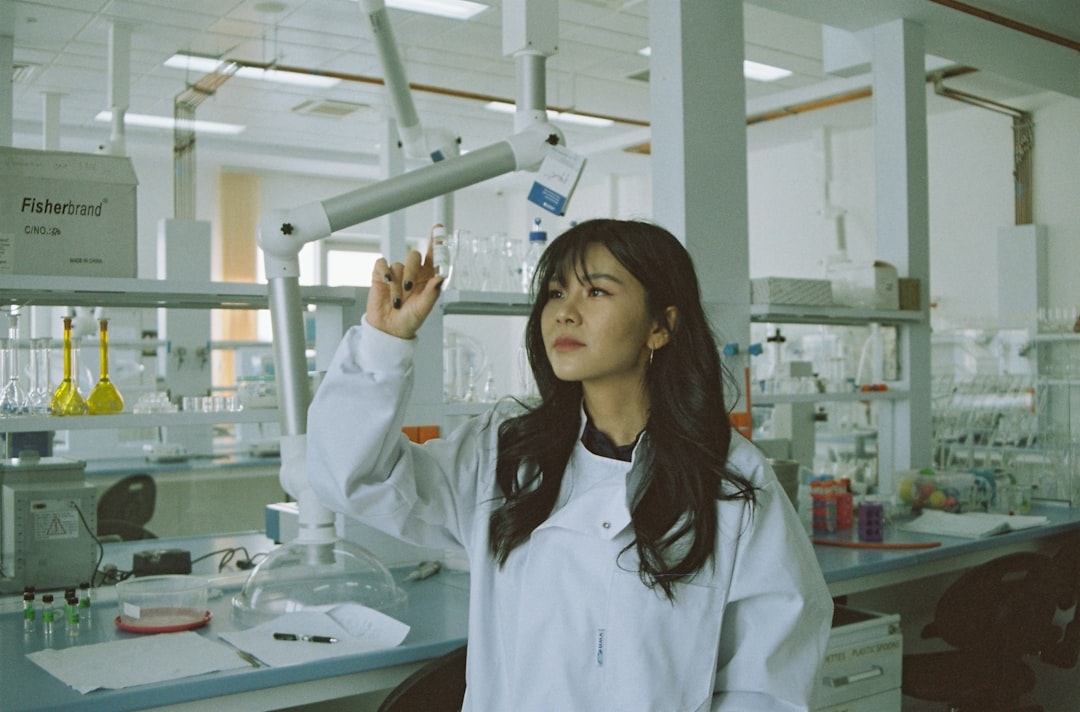
Korean biotech company NIBEC has launched KLARA Beauty in the United States. The brand brings regenerative peptide science from the research lab to the consumer shelf. And it is not just another K-beauty line with a peptide label. NIBEC holds over seventy patents in growth factor and peptide technology. That gives this launch a different kind of credibility.
Here is what makes KLARA Beauty different. Most peptide skincare products use signal peptides that tell fibroblasts to produce more collagen. KLARA Beauty uses recombinant human growth factors — EGF, FGF, and IGF — developed through NIBEC’s own biomanufacturing platform. These growth factors are proteins, not short peptides. But they work through the same fundamental mechanism: binding to cell surface receptors and triggering repair pathways. The difference is potency. Growth factors are larger, more complex, and more specific in what they signal cells to do.
Why This Launch Matters for the Peptide Skincare Market
The US market for peptide skincare is at an inflection point. Consumer awareness has never been higher. Google searches for “peptide serum” have grown steadily over the past three years. But most products on the shelf use the same three or four well-known peptides. Matrixyl. Argireline. GHK-Cu. These ingredients work, but they have been around for years. The market needs differentiation.
NIBEC’s entry changes that calculation. The company is not a cosmetics brand that buys ingredients from Sederma or BASF. It is a biopharmaceutical company that spent decades developing growth factor therapies for wound healing and tissue regeneration. Now it is reformulating those same technologies for cosmetic use. That is a different level of science than what most peptide brands bring to the table.
Expert Insight
But here is what most people miss. Growth factors are harder to formulate than small peptides. They are larger molecules. They are more sensitive to pH, temperature, and preservatives. A growth factor serum that sits on a store shelf for eighteen months may have significantly less activity than the day it was manufactured. NIBEC’s patent portfolio includes stabilization technology, but the real-world stability testing matters more than the patent filing. Until independent labs verify the activity claims, treat the potency numbers as marketing, not science.
What This Means for the Broader Category
The bigger story here is about category evolution. Peptide skincare started with a few well-characterized matrikines. Then it expanded into copper peptides. Then into multi-peptide blends. Now it is moving into recombinant growth factors, which sit at the boundary between cosmetics and biologics. The FDA does not regulate growth factors in cosmetics the same way it regulates them in drugs. That regulatory gap creates a fast lane for innovation, but it also means consumers need to be more careful about what they buy.
KLARA Beauty launches with four products: a serum, a cream, an eye treatment, and a mask. All four use NIBEC’s proprietary growth factor complex. Pricing is in the premium range, between sixty and one hundred twenty dollars per product. Distribution is direct-to-consumer through the brand’s website.
Further Reading
- GHK-Cu: The Complete Science Guide to Copper Peptides
- Palmitoyl Tripeptide-38: The Matrix-Reconstructing Signal Peptide
- The Biotech Beauty Boom: How Science is Reshaping Skincare
Last reviewed: July 2026. Peptide Proof Editorial Team. Sources: BeautyMatter, Byrdie, Cosmetics Business.